
**Beltane, Hexxenacht, & Walpurgisnacht**
The Irish and British fire festival of Beltane is commonly known throughout the Western world. Taking place each year on May 1st and sometimes called May Day, it is a celebration of the awakening Earth, fertility, and the fires of the passion between the May Queen and the Green Man as They unite to return the green things to the world.
Dating back to ancient times and now part of the Neo-Pagan Eightfold Wheel of the Year, bonfires are lit, May poles dressed in rainbow-coloured ribbons for dancing, and some festivals, such as Edinburgh’s annual evening of merrymaking on Calton Hill, involve processions and
theatrical re-enactments in elaborate costumes. It is a time of intense energy and exquisite ritual, drumming, music, and exaltation, and high hopes for the coming warm days of the year.
Perhaps a somewhat lesser-known yet no less interesting festival is that of Hexxenacht or Witches’ Night, an ancient Germanic pre-Christian spring festival traditionally celebrated on April 30th.
It is said in old Germanic folklore that the Witches used to gather on the Brocken (the highest peak in Germany’s Harz Mountains) to honour the coming of spring. As with Samhain, the Veil is thin at this time of year, and the Brocken was a liminal space. Later, when Christianity and the
horrific insanity of Witch Hunt fever took hold of Europe, Hexxanacht was countered by the Church with Walpurgisnacht – St Walpurga’s Feast Day. The bonfires once lit only by Witches were now called Hexenfeur, and together with a Christian form of apotropaic magic (such as
ringing church bells or banging cooking pots with spoons), supposedly served to repel “evil” and the “devil,” which, according to the Church, included Witches.
Eventually, as the Neo-Pagans of the 20 th century began reconstructing the old ways and forging a path forward to modern worship and rituals, Walpurgisnacht slowly blended with Hexxenacht. While some Christians still honour it strictly as St Walpurga’s Feast Day, others simply celebrate it as a time to welcome spring, and Pagans have reclaimed it as well.
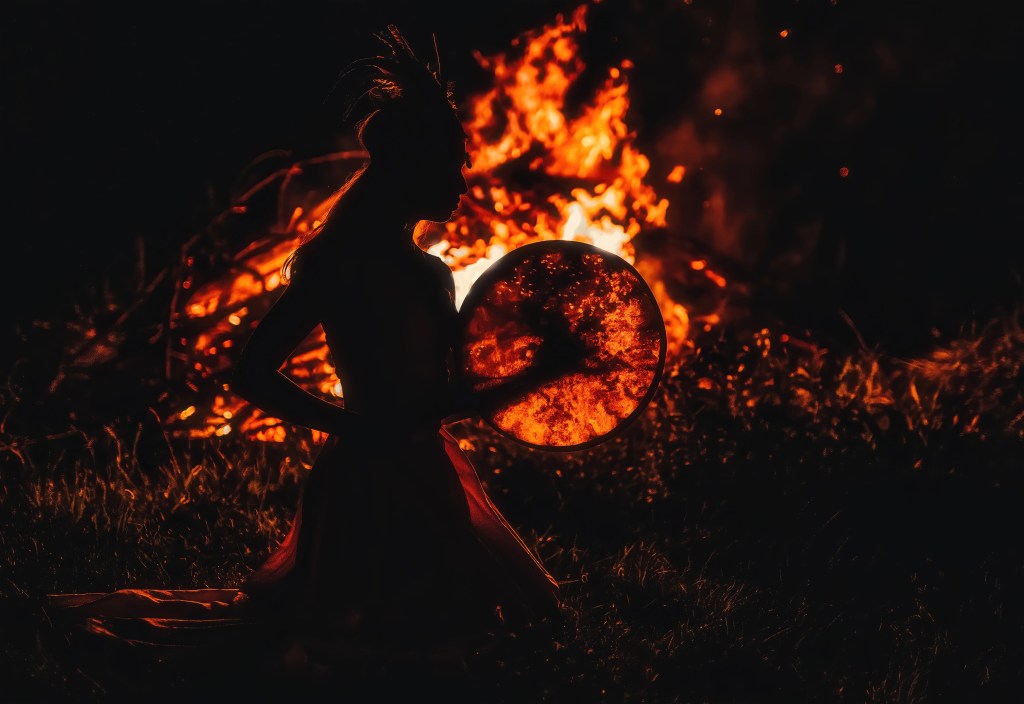
Among the Pagans, traditions including bonfires, jumping the fire, fertility rites, invoking the Gods and Goddesses such as Óðinn, Freyja, Holda, or Hekate, and spellwork are practiced today, as well as offerings of bread and honey, dancing into May, and dressing in costume.
Walpurgisnacht/Hexxenacht is not only observed in Germany, however. Swedish, Finnish, Czech, and Norse Neo-Pagans across the diaspora still commemorate it, though it is variously also known as Valborgsmässoafton (Sweden), Vappu (Finland), and Čarodějnice (Czech
Republic). Additionally, some Pagans, particularly Eclectic Witches, combine Hexxenacht/Walpurgisnacht and Beltane, often using April 30th as the “Eve” for Beltane.
There is power and beauty in taking back the traditions of our ancestors that were co-opted into the Church, and, as best we can, returning them to their magical forms of old. However you choose to celebrate the return of spring, may you be blessed by the Gods and Goddesses.
Author – R.H. Winters

