
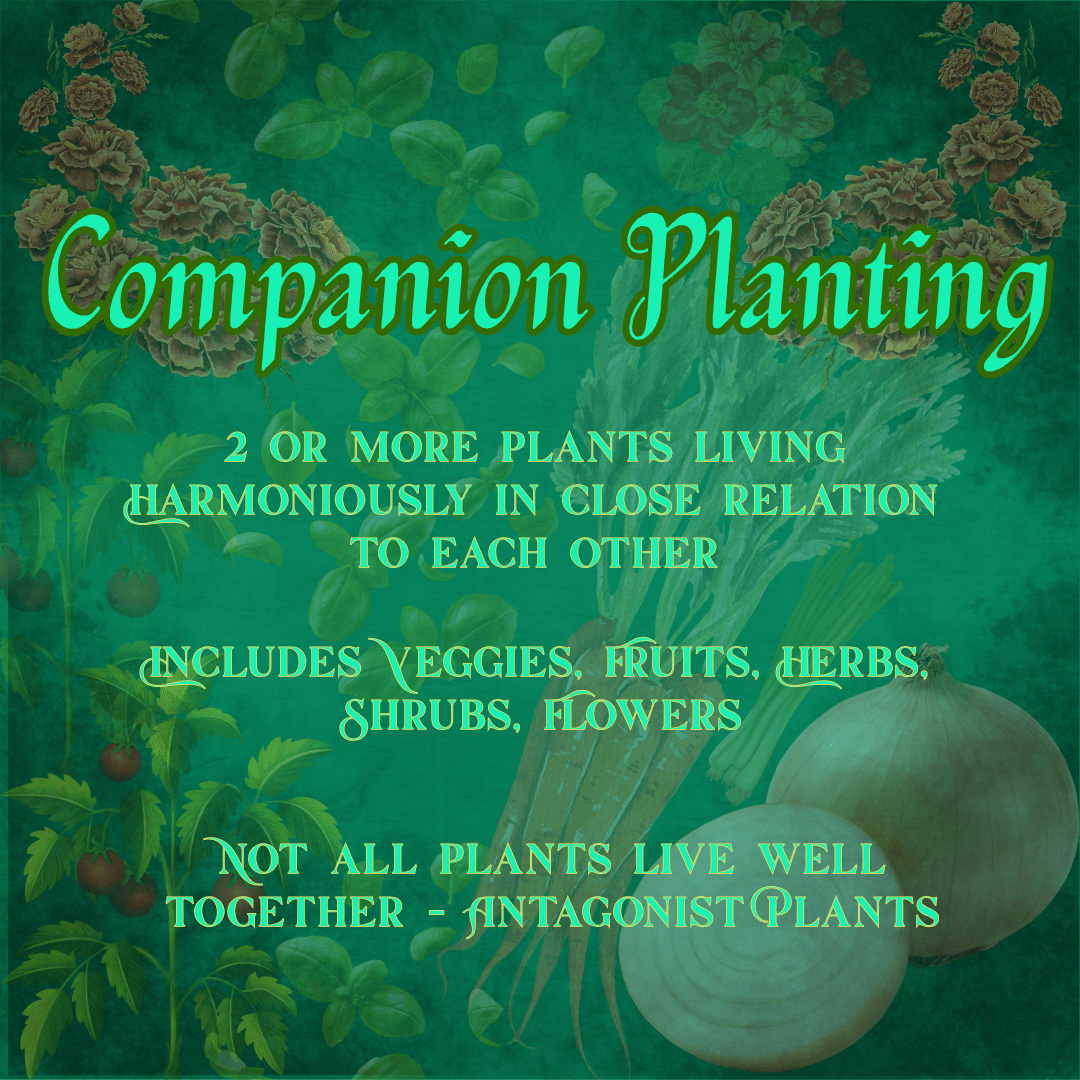
I’m sure we have all heard the term, “Companion Planting”. If you’ve been around the gardening community for any amount of time, I’m sure it’s been thrown around once or twice. But what is companion planting truly? By definition, companion planting is the practice of placing two plants in the garden together to create a beneficial result. Companion is in reference to usually 2 plants, but could be more. Not to be confused with the concept of ‘3 Sisters Planting’, which refers to a very specific combination, but we will discuss that later. Companion planting can be mutually beneficial, where both plants receive benefit from being next to each other, or it could be one sided, like planting certain flowers simply to dissuade pests or lure in beneficial insects. Companion planting encompasses not just vegetables and herbs, but also fruits and flowers, sometimes even shrubs and trees! If compatibility is in question, it’s always best to do a quick search to see if certain plants will live peaceably together. The biggest advantage of companion planting is pest deterrence, but it can also create healthier soils, healthier plants, and greater pollination rates.
Companion planting goes right back to your planning stages. What do you want to plant in your garden? Once you determine what you want to plant, then you need to identify its challenges. Such as, What pests love your tomatoes? What kind of disease might your potatoes get? Once you have this information, you can then look and see if there are any other plants that will help negate these weaknesses, or conversely make it worse. Tomatoes can get things like, tomato hornworms and white flies. Basil to the rescue. Potatoes can be a blight risk? Better not plant close to tomatoes who are also a blight risk, as it might promote disease transfer between plants. Plants that are not beneficial next to each other, and in fact could cause negative effects are called ‘Antagonist plants’. Pairing these kinds of plants could result in competition for nutrients, sunlight and water, attracting pests, repelling beneficial insects, disease transferring, and could in fact stunt the overall growth of one or both plants.
The list of companion plants and antagonist plants is very long and detailed. Much too long to print in its entirety here, so I’ll add two links, but there are lots of lists out there with just a quick search and most gardening books have quick references to what you should and should not plant next to each other.
https://www.almanac.com/companion-planting-guide-vegetables
https://www.westcoastseeds.com/blogs/wcs-academy/companion-planting
Here are some examples of beneficial companion plants:
Basil and Tomatoes – As stated earlier, Basil and its pungent aroma is a tomato plant’s best friend. It keeps the hornworms and white flies away. The tomatoes in return, shade the basil.
Cucumber and Chamomile – Chamomile attracts beneficial insects, like hoverflies and wasps who eat cucumber pests.
Calendula and Broccoli – Calendula repels aphids and white flies while attracting lady bugs!
Here are some examples of Antagonist plants:
Tomatoes and Potatoes – We already touched base on this one, but both plants are heavy feeders and will compete for nutrients, potentially stunting both. As well, both are prone to blight (a disease caused by a fungus-like organism), and can in fact trade it back and forth. A potato or tomato plant with blight needs to be discarded as it can easily work its way into the plant and is not suitable for eating.
Fennel – This plant inhibits practically everything else out there, and should never be planted next to anything. It gets its own tiny little spot, well away from, well, everything.
Sage and Other Herbs – Sage and any drought tolerant herbs do not live well with water needy herbs like basil. They have conflicting watering needs, and can lead to poor growth in one or both plants.
I tried to keep these examples limited to container gardening, but be aware, some of these plants will attract certain insects you may not want around your place. Chamomile may be beneficial to cucumber, but it will attract wasps. Yes, the wasps eat the bad buggies that will eat your cucumbers, but do you really want those jerks hanging out on your patio? Just a few other things to consider. You may choose to also grab some wasp repelling plants like mint, marigold, wormwood, citronella, and eucalyptus.
In conclusion, companion planting has many benefits, including reducing the amount of human interaction needed, as well reducing unwanted pets, and increasing yields by increasing pollinators! Have fun planning your garden, and trying something new!
– Authored by: Marissa L.C.

